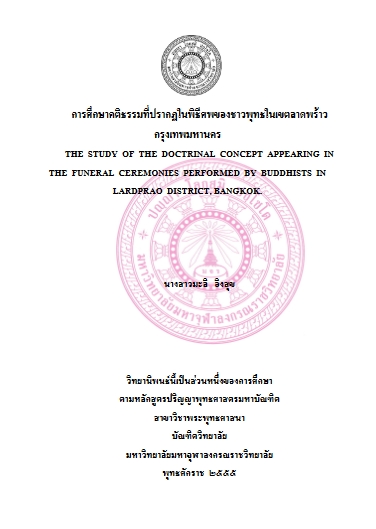
| Title (Thai) | การศึกษาคติธรรมที่ปรากฏในพิธีศพของชาวพุทธใน เขตลาดพร้าว กรุงเทพมหานคร |
|---|---|
| Title (English) | The Study of the Doctrinal Concept Appearing in the Funeral Ceremonies Performed By Buddhists in Lard Prao District, Bangkok. |
| Author | นางสาวมะลิ อิงสุข |
| Advisor 1 | พระมหาสมบูรณ์ วุฑฺฒิกโร (พรรณา), ดร |
| Advisor 2 | ดร.ประพันธ์ ศุภษร |
| Issue Date | 29 กันยายน 2555 |
| Education Section | บัณฑิตวิทยาลัย |
| Degree | พุทธศาสตรมหาบัณฑิต (พธ.ม.) |
| Degree Level | master |
| Branch | พระพุทธศาสนา |
| URI | https://e-thesis.mcu.ac.th/items/2622 |
| Collection | วิทยานิพนธ์ |
| Download | 0 |
| Views | 359 |
การศึกษาคติธรรมที่ปรากฏในพิธีศพของชาวพุทธในเขตลาดพร้าว กรุงเทพมหานคร มีวัตถุประสงค์ ๓ ประการ คือ ( ๑) เพื่อศึกษาพิธีศพและคติธรรมที่ปรากฏในคัมภีร์พระพุทธศาสนา (๒) เพื่อศึกษาพิธีศพและคติธรรมในพิธีศพของชาวพุทธในสังคมไทย ( ๓) เพื่อศึกษาพิธีศพและคติธรรมที่ปรากฏในพิธีศพของชาวพุทธเขตลาดพร้าว กรุงเทพมหานคร
พิธีศพครั้งพุทธกาลเป็นพิธีที่ปฏิบัติเรียบง่าย เริ่มตั้งแต่มีการตาย ในคัมภีร์ไม่ได้กล่าวถึงการอาบน้ำศพแต่จะกล่าวไว้ว่า พระพุทธเจ้าสรงน้ำศพพุทธบิดาด้วยน้ำหอม ทรงแต่งตัวให้พระศพด้วยผ้าขาวสะอาด ตั้งพระศพไว้เคารพบูชาด้วยดอกไม้เครื่องหอม 7 วัน แล้วแห่พระศพไปฌาปนกิจที่ป่าช้า พระอัฐิประชาชนจะนำไปประดิษฐานไว้ ในสถูป เพื่อสักการระบูชา อย่างไรก็ตาม พิธีศพครั้งพุทธกาลให้คติธรรมเรื่องบาป เรื่องไตรลักษณ์ เรื่องอโหสิกรรมเรื่องความไม่ประมาท และเรื่องความกตัญญู
พิธีศพในสังคมไทย มีวิธีการจัดการหลากหลายไปตามวัฒนธรรมประเพณี ความเชื่อของแต่ละท้องถิ่น โดยผสมผสานวัฒนธรรมดั้งเดิมกับพิธีการในพระพุทธศาสนา เพื่อให้เหมาะสมกับวิถีชีวิตของชุมชนและคติธรรมความเชื่อของตน การจัดการศพในแต่ละพิธีเป็นสื่อการสอนให้พิจารณาธรรมะของพระพุทธศาสนา เช่น การอาบน้ำศพ มีคติธรรมเกี่ยวกับการอโหสิกรรม พิธีตามไฟหน้าศพ มีคติธรรมเตือนสติเรื่องการดำเนินชีวิต พิธีแห่ศพ มีคติธรรมในเรื่องไตรลักษณ์
พิธีศพในเขตลาดพร้าว กรุงเทพมหานคร มีทีมบุคลากรปฏิบัติหน้าที่ช่วยเหลืองานอย่างมีระบบ มีบางพิธีที่ไม่ปฏิบัติตามแบบโบราณเพราะสภาพสังคมเปลี่ยนแปลงตามกาลเวลา แต่ยังคงมีคติธรรมตามหลักธรรมในพระพุทธศาสนา คือ ความกตัญญู ไตรลักษณ์ การอโหสิกรรม ความไม่ประมาทในชีวิต เตือนสติให้มีความประพฤติดีตามแนวทางของศีลธรรมพระพุทธศาสนา เพื่อไม่เกิดความประมาทในแต่ละช่วงวัยของชีวิต และมุ่งสอนให้มีสติปัญญาจากการจัดการพิธีศพ
The Study of the Doctrinal concepts appearing in the Funeral Ceremonies performed by the Buddhists consists of three valuable objectives namely :- (1)To study the Funeral Ceremonies and to understand the Ethical mottos appearing in the Buddhist Scriptures. (2)To study the management of the Funeral Ceremonies and the Ethical Doctrines practiced by the Buddhists in Thai Societies. (3)To study the Funeral Ceremony management by the Buddhists in Lard Prao District, Bangkok, Thailand.
The Doctrinal concept in the Buddhist funeral ceremonies is morality. In the ceremony of management of the Buddha’s remains it was the Doctrinal concept of precaution or carefulness ( Appamãda Dhamma ) in all compounded things. The three characteristics of Sänphäras are Aniccatä ( Impermanence ) Dukkhatã ( Suffering ) and Anattatã ( Soullssness ). The additional moral principles are : gratitude
( Kataññü ), Action ( Kamma ), Sin ( Pãpa ) and Wisdom ( Paññã ). These moral principles are the Doctrines which warn people not to be careless, because everyone must go to death without warning. Even the Buddha could not escape the death ( Pärinibbäna).The Doctrinal concept of the Thai funeral ceremonies which consist of many activities is composed of elements from various cultures suitable for the people’s ways of life and beliefs. For example, the performing of the bathing ceremony of the remains which is an activity showing respect for the dead, and so on.The bathing ceremony of the copse is also a way of asking for excuse from the dead. To tie the dead body with sacred thread is one of three Doctrinal concepts. The ceremony of opening the coffin has been customary for a long time.The Doctrinal concept in funeral ceremonies in Lard Prao District, Bangkok,Thailand, is of the personal staff responsible for this work , That is the sign of gratitude
and the knowledge of precaution, or carefulness ( Appamãda Dhamma ) which causes the minds to be firmly in goodness.
| Document Name | File | Size | Type | Date | Download |
|---|---|---|---|---|---|
| Full Text | QdKfKXrSzHsxrSMLgWn5qOaAQV4vox9WhzxOiQD9.pdf | 3,001.47 KB | 17 Dec 2021 |